

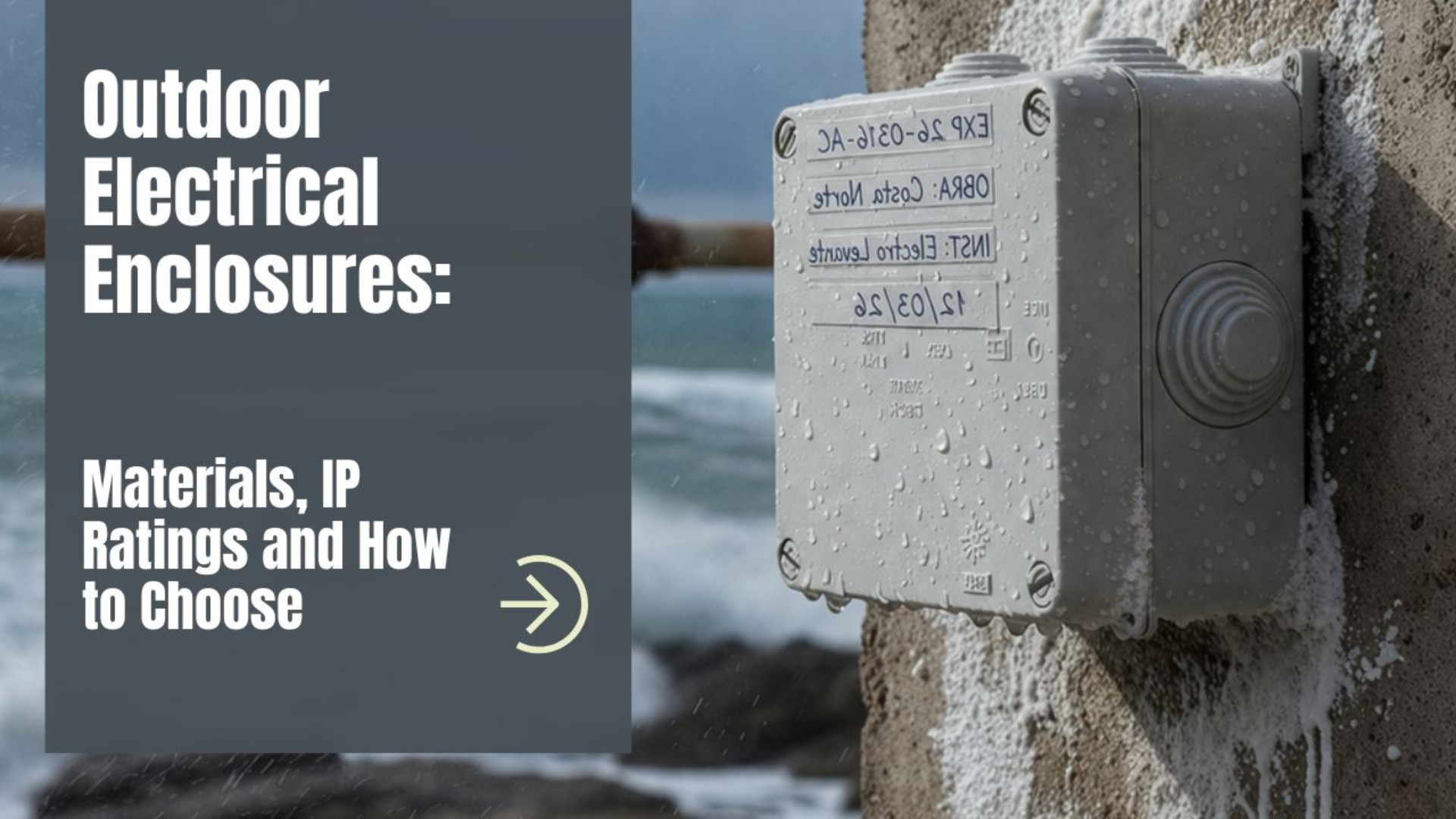
An outdoor electrical enclosure is a protective housing designed to safeguard electrical components in exposed or external environments. The right choice depends on material, IP rating, environmental conditions, internal space and the level of protection required. In practice, choosing well matters because the enclosure does much more than “hold” equipment: it helps determine how reliably the installation will perform over time in rain, dust, sunlight, impact-prone areas or demanding technical settings.
In the UK, this topic sits across several closely related search terms: outdoor electrical enclosure, outdoor electrical cabinet, electrical enclosure, electrical cabinet, GRP electrical enclosures, outdoor electrical box and weatherproof electrical box. That means the article needs to do more than define a product. It needs to explain the differences between enclosure types, the role of materials, the importance of IP ratings, and the practical factors that help you choose the right solution for the job.
This guide is written for that exact purpose. It will explain what an outdoor electrical enclosure is, how it differs from a cabinet or box, where it is typically used, when GRP becomes a strong option, and which criteria matter most before specification or purchase. Where relevant, it also connects to the English Solera site, including the main electrical enclosure catalogue, the guide to IP protection in electrical installations, and product families such as Multibox, Polibox and Vera.
What is an outdoor electrical enclosure?
An outdoor electrical enclosure is a housing designed to protect electrical devices, controls, modular equipment, terminals and internal wiring in environments where weather, moisture, dust or impact may affect performance. Its function is not only to cover the contents, but to create a controlled and safer internal space for the electrical assembly.
That distinction matters. A basic indoor box and a properly selected outdoor enclosure do not serve the same purpose. Outdoors, the enclosure becomes part of the protection strategy of the whole installation. It helps preserve components, reduce environmental stress, improve durability and support maintenance access.
In many projects, the enclosure is also part of the practical workflow of the installer or specifier. A unit that offers the right size, access, sealing and internal organisation will usually save time at installation stage and reduce problems later.
Outdoor electrical enclosure, cabinet or box: what is the difference?
The three terms are related, but they are not always interchangeable. In search behaviour, users often mix them. In technical use, though, each tends to suggest a slightly different level of size, purpose or application.
| Solution | Typical use | Capacity | Protection level | Best application |
|---|---|---|---|---|
| Outdoor electrical box | Compact housing, simple protection, smaller connection or distribution tasks | Low to medium | Varies by model | Simple outdoor points, compact assemblies, weatherproof local protection |
| Outdoor electrical enclosure | General protection for electrical equipment in exposed installations | Medium | Medium to high | Residential, commercial and technical outdoor settings |
| Outdoor electrical cabinet | Larger, more robust housing for more complex or higher-capacity installations | Medium to high | High or very high, depending on design | Industrial, utility, technical and demanding outdoor environments |
In practice, enclosure is the best broad term for the article because it covers a wide professional scope. Cabinet is useful when volume, robustness and more complex assemblies are involved. Box is relevant as neighbouring semantic support, especially because many users search for terms like weatherproof electrical box or waterproof electrical box. However, for technical selection, “enclosure” remains the stronger lead term.
This distinction becomes clearer when comparing Solera’s English product families. Compact weatherproof distribution units such as Vera weatherproof distribution boxes sit closer to the “box” or compact enclosure end. More robust modular solutions such as Multibox thermoplastic cabinets move towards the cabinet side of the spectrum. GRP-heavy solutions such as Polibox empty polyester cabinets sit firmly in the heavy-duty enclosure/cabinet category.
Where are outdoor electrical enclosures used?
Outdoor electrical enclosures are used wherever electrical equipment must be protected outside normal indoor conditions. The exact application changes, but the principle is always the same: the enclosure must shield the electrical assembly from environmental exposure while remaining functional and maintainable.
Common applications include:
- Residential outdoor settings, such as gardens, driveways, poolside equipment, gate automation and outbuildings.
- Commercial installations, including parking areas, service zones, rooftop plant, terrace equipment and external supply points.
- Industrial environments, where dust, impact, moisture or operating intensity require a more robust protective housing.
- Technical service areas, such as plant rooms, auxiliary distribution points, control positions or external service cabinets.
- Exposed utility or control points, especially where modular devices, sockets, control gear or protection devices need a reliable housing.
For example, a compact outdoor distribution point in a residential or light-commercial setting may work well with a Vera enclosure, while a more demanding industrial or technical environment may need the stronger sealing and impact resistance offered by Multibox or Polibox.
Common materials used in outdoor electrical enclosures
The material of the enclosure affects durability, weight, corrosion behaviour, impact resistance and suitability for outdoor exposure. There is no single best material for every project. The correct choice depends on the environment and the demands of the installation.
Metal enclosures
Metal enclosures are often chosen for their structural rigidity, robust feel and suitability for larger assemblies. In some technical or professional environments, that makes them an obvious option.
That said, metal is not automatically the best choice for all outdoor conditions. Weather exposure, corrosion risk, maintenance requirements and the actual installation context all matter. A metal cabinet can be very appropriate in some technical environments, but it should not be selected on “strength” alone without looking at the full environmental picture.
In Solera’s English catalogue, Steelbox shows the steel-cabinet side of the range. Even though those products are often associated with technical rooms, offices and indoor installations rather than direct weather exposure, they are a useful reference for understanding when a metal cabinet approach becomes relevant.
Plastic enclosures
Plastic or thermoplastic enclosures are widely used because they offer a good balance between durability, weight, handling and cost. In many outdoor residential, commercial and technical projects, they are the most practical choice.
They are particularly useful when you need a sealed enclosure with reliable environmental performance but without the weight or complexity of a heavier cabinet format. Solera’s Vera weatherproof distribution boxes and Multibox thermoplastic cabinets are strong examples of this category.
GRP electrical enclosures
GRP electrical enclosures are especially important in the UK context because GRP is a strong, recognised search term and a highly relevant material category for outdoor technical installations.
GRP stands for glass-reinforced polyester or glass-fibre reinforced polyester, depending on the technical description used. In practice, it combines strong environmental resistance with good mechanical performance. This makes it particularly suitable for demanding outdoor use, industrial settings, coastal environments or installations where long-term resistance matters.
That is why Polibox polyester enclosures deserve a prominent place in this topic. Solera describes them as reinforced polyester enclosures with IP66 and IK10 performance, aimed at demanding professional use. When the project calls for a more heavy-duty outdoor enclosure, GRP is often one of the best material routes to assess. :contentReference[oaicite:1]{index=1}
Material comparison
| Material | Strengths | Limitations | Recommended use |
|---|---|---|---|
| Metal | Structural rigidity, robust cabinet feel, suitable for larger assemblies | Must be evaluated carefully against corrosion and exposure conditions | Technical installations, utility cabinets, some professional environments |
| Plastic / thermoplastic | Lightweight, versatile, good balance of sealing and practicality | Not always the best fit for the harshest environments | Residential outdoor settings, commercial use, technical service points |
| GRP / reinforced polyester | Strong environmental resistance, good impact performance, highly suitable outdoors | More specialised choice, typically justified by higher environmental demands | Industrial use, exposed technical areas, corrosive or demanding outdoor environments |
IP ratings and environmental protection
IP ratings are one of the most important parts of selecting an outdoor electrical enclosure. The IP code indicates how well the enclosure protects against the ingress of solid objects and liquids. In outdoor settings, this is not a secondary detail; it is often one of the decisive selection criteria. Solera’s English guide explains IP using the BS EN 60529 framework and how it relates to dust and water ingress protection. :contentReference[oaicite:2]{index=2}
For outdoor use, the enclosure needs to match the real conditions of the site. A partly sheltered external wall, an open service yard and a fully weather-exposed industrial point do not demand the same level of protection. This is why a specification based only on dimensions or price usually falls short.
If the installation is exposed to dust, rain, spray, hose-down cleaning or persistent damp, the enclosure must be selected accordingly. Solera’s Multibox range is built around IP65 and IK10 performance, while Polibox reaches IP66 and IK10. Those differences matter when environmental demands increase. :contentReference[oaicite:3]{index=3}
For a broader explanation of ingress protection and how to interpret it in electrical installations, it makes sense to link directly to Solera’s article on IP protection in electrical installations.
How to choose the right outdoor electrical enclosure
The right enclosure is the one that fits the actual installation conditions, not just the one that appears strongest or cheapest on paper. In practice, selection should be based on a short list of essential criteria.
- Installation environment: residential outdoor, commercial, industrial or technical service area.
- Weather exposure: direct rain, damp, spray, windborne dust or partial shelter.
- Corrosion risk: especially relevant in coastal, industrial or chemically aggressive areas.
- UV exposure: important for outdoor installations with long-term sun exposure.
- Mechanical resistance: especially in public, accessible or impact-prone locations.
- Internal space: enough room for devices, wiring, safe routing and future access.
- Future expansion: extra space often saves trouble later.
- Maintenance access: easy access matters for inspection, servicing and upgrades.
This is why specification should not be reduced to “plastic or metal?” or “what size do I need?”. A smaller enclosure that looks sufficient on day one may quickly become a constraint once wiring, future additions or access for maintenance are taken into account.
When is a cabinet better than a smaller enclosure or box?
An outdoor electrical cabinet makes more sense when the installation grows in complexity, capacity or environmental demand. In many projects, a compact outdoor box or enclosure is the right answer. But once the number of devices increases, or the installation becomes more technical, moving up to a cabinet format is often the better decision.
That tends to happen when:
- the assembly contains multiple modular devices or a more complex internal arrangement;
- the enclosure must support easier maintenance and cable management;
- the installation is expected to expand over time;
- the environment is particularly demanding and a more robust solution is justified.
In other words, the difference is not just size. It is about how much protection, working space and long-term practicality the installation needs.
Common mistakes when choosing an outdoor electrical enclosure
Several mistakes come up repeatedly in real projects:
- Choosing by price only, without matching the enclosure to the environment.
- Underestimating IP protection, especially in exposed external locations.
- Ignoring the material, as though metal, thermoplastic and GRP behaved the same.
- Choosing a unit that is too small, leaving no room for wiring or later changes.
- Not planning for expansion, even when future additions are likely.
- Overlooking maintenance access, which often creates avoidable long-term problems.
Most of these errors do not necessarily show up on day one. They appear later as awkward installations, difficult servicing, reduced enclosure life or poorly protected equipment.
Frequently asked questions about outdoor electrical enclosures
What is an outdoor electrical enclosure?
An outdoor electrical enclosure is a protective housing designed to safeguard electrical components in exposed or external environments where weather, dust, moisture or impact may affect performance.
What is the difference between an electrical enclosure and an electrical cabinet?
An enclosure is the broader term and often covers a wide range of protective housings. A cabinet usually suggests a larger, more robust or more capacity-driven solution.
Which material is best for outdoor electrical enclosures?
It depends on the environment. Thermoplastic works well in many general outdoor settings, while GRP is often preferred for more demanding or more aggressive environments.
When should you use a GRP electrical enclosure?
GRP is often a strong choice when the enclosure is exposed to demanding outdoor conditions, industrial environments, corrosion risk or long-term weather stress.
What IP rating is suitable for outdoor electrical installations?
That depends on exposure to dust, rain, spray, moisture and cleaning conditions. The enclosure should always be matched to the actual site environment.
How do you choose the right enclosure size?
You should allow for internal components, wiring space, maintenance access and likely future expansion, not just the minimum space needed on the day of installation.
Conclusion
For UK search and specification logic, the strongest route is to lead with outdoor electrical enclosure, expand naturally into outdoor electrical cabinet and use outdoor electrical box as supporting semantic language rather than the main technical frame. That keeps the article aligned with how people search while still guiding them towards the right professional terminology.
The key to choosing well is simple: match the enclosure to the environment. Material, IP rating, mechanical resistance, internal capacity and long-term maintainability all matter. For further reading, it makes sense to explore Solera’s enclosures catalogue, the IP protection guide, and outdoor-ready families such as Vera, Multibox and Polibox.