

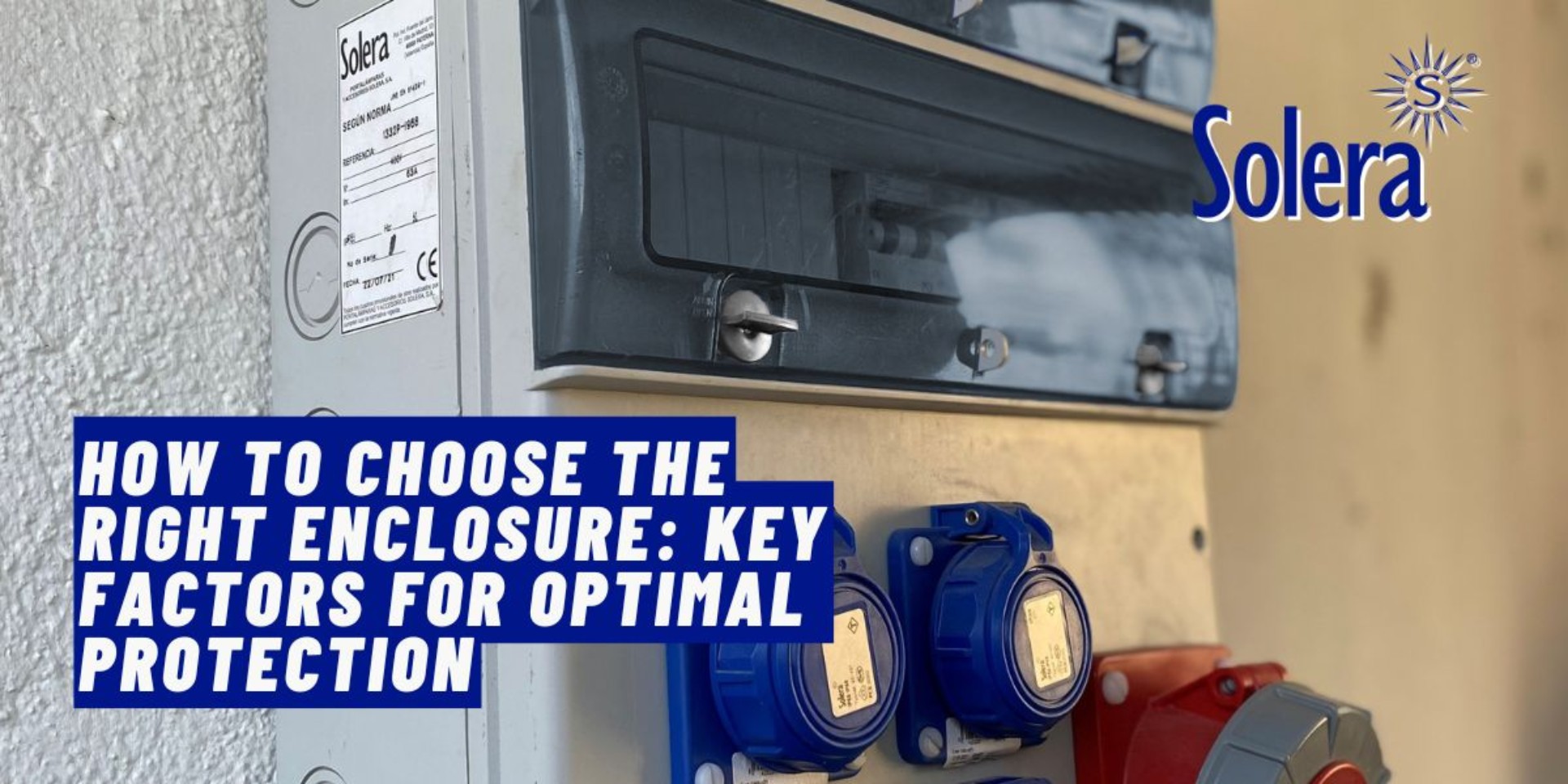
Electrical enclosures are boxes, housings and cabinets used to accommodate connections and equipment in an electrical installation. Choosing an enclosure means matching its function, location, usable space and declared characteristics to the project. A junction box, a distribution box and an electrical cabinet serve different purposes; recognising those differences is the first step towards a suitable choice.
This guide follows the selection process from the application to the catalogue reference. It explains how to describe the equipment, compare alternatives and identify the documentation needed before specifying a product. Appearance and a single protection rating should never be the only selection criteria.
What is an electrical enclosure?
An enclosure houses electrical equipment and contributes to protection according to its design and declared performance. It also affects internal organisation, cable entry, access to devices and maintenance. The enclosure therefore needs to be considered alongside the equipment it will contain, rather than selected after the rest of the design is complete.
An empty enclosure is different from a finished electrical assembly. The finished assembly includes devices, connections and a configuration that must be assessed for its intended application. The characteristics of an empty box cannot automatically be attributed to every assembly installed inside it.
Junction box, distribution box or electrical cabinet?
Junction boxes for cable connections
A junction box is a starting point when the requirement is to house terminals, cable joints or branches. Selection should consider conductor numbers, connection devices, their dimensions and the routes of incoming cables or conduits. Sufficient external dimensions do not necessarily provide enough room for a workable arrangement inside.
Future access matters as well. The lid, fixing position and closure should support the interventions envisaged. Where environmental protection is required, check the specific reference and the compatible accessories needed to maintain its declared characteristics.
Distribution boxes for modular devices
A distribution enclosure accommodates the devices specified for the assembly. With modular equipment, capacity in modules and rows is useful, but usable depth, device arrangement and wiring space also need to be checked. Module count alone does not establish suitability.
Prepare an equipment list before choosing the box. Confirm the reference’s standard contents, such as mounting supports, rails, door or other accessories, and identify anything supplied separately. This makes comparisons between products more meaningful.
Electrical cabinets
A cabinet may be appropriate when the equipment, dimensions or internal arrangement calls for a different housing format. However, the term does not imply a universal specification or a complete set of internal accessories.
Check usable dimensions, fixing systems, compatible accessories and equipment access. The decision between a box and a cabinet should follow the installation requirements. A larger enclosure does not automatically offer a higher level of environmental or mechanical protection.
Start enclosure selection with its function
Define what the housing will contain and what the completed assembly must do. Will it accommodate connections, distribute circuits or house protection and control functions? A component list and an initial diagram provide a consistent basis for comparing options.
In residential projects, integration and modular capacity may be prominent considerations. Commercial premises may also require convenient maintenance access and provision for future circuits. In technical or industrial areas, the operating environment and connection arrangement need particularly clear descriptions.
The Solera electrical enclosure catalogue provides access to the available families. Use it to compare dimensions, mounting arrangements and documentation after defining the application, rather than reshaping the entire project around the first box that looks suitable.
Indoor or outdoor: describe the actual environment
“Outdoor” does not describe a single operating condition. A sheltered area, a sunny facade and a location exposed to cleaning water present different demands. Dust, humidity, temperature and substances present at the site should also be considered.
Explain whether cleaning, condensation, solar exposure or potentially aggressive substances are expected. This information helps identify products with documented characteristics for the intended use. No single IP rating addresses every environmental factor.
Sunlight and temperature
UV resistance must be checked in the product documentation. A high IP rating does not demonstrate UV resistance. Nor does it establish the permissible operating temperature or the thermal behaviour of an assembly.
The equipment inside may also generate heat. Its arrangement and operating conditions must be considered as part of the assembly design. Adding openings or ventilation without assessing the consequences can affect the enclosure’s protection.
Moisture and cleaning conditions
Describe how water could reach the enclosure: splashing, rain, cleaning or accumulation nearby. These are different situations. Position, orientation and cable entries should be included when assessing the arrangement.
Check the manufacturer’s declared characteristics for the actual exposure. An enclosure described as weatherproof still requires the correct installation and accessories. The name is not a substitute for a product specification or the requirements of the installation.
IP and IK ratings answer different questions
IP concerns protection against access to hazardous parts and the ingress of solid objects and water according to the classification. IK concerns resistance to external mechanical impacts. One rating cannot be used to infer the other.
Rather than asking for the “most waterproof box”, describe the conditions that the product must withstand. A declaration for water jets is different from one for immersion. Impact resistance does not demonstrate chemical resistance or suitability for prolonged sunlight exposure.
The guide to IP protection in electrical installations develops this criterion. When comparing references, consult the specific declaration, installation conditions and accessories involved.
Installation also affects protection
A cable entry, an incompatible accessory or an unassessed modification can affect performance. Follow the manufacturer’s mounting, closure and machining instructions and check compatibility between the items used.
Assess the completed assembly rather than transferring a figure from an empty enclosure to every possible configuration. The final result depends on equipment integration and the conditions envisaged for use.
Plastic or metal electrical enclosures?
Material is a selection criterion that needs to be related to documented performance. Plastics do not all behave identically, and metal cabinets do not all have the same construction, finish or environmental resistance.
Plastic enclosures
Compare the declared material, its suitability for expected conditions, dimensions and mounting features. Lower weight can simplify handling, but it does not replace checking the required mechanical performance.
Do not assume that every plastic box resists all chemicals, sunlight or elevated temperatures. These properties should be confirmed for the specific reference and service conditions. Choosing a material by name alone can overlook meaningful differences between products.
Metal enclosures
For a metal cabinet, check the material, surface finish, construction and accessories. Metal construction alone does not establish a particular corrosion resistance or electromagnetic compatibility performance.
Electrical integration and protective measures must be determined for the assembly and installation. Communicate any special project requirements before choosing a product and confirm them against the applicable documentation.
Dimensions, modules and usable wiring space
Consider usable width, height and depth alongside external dimensions. Devices, conductors and cable routes need space. A layout based only on the visible front of the equipment can prove inadequate once connections are arranged.
For modular boxes, list the devices and their space requirements. Check available rows and necessary accessories. For cabinets, also consider arrangement on mounting plates or supports and access to items that will need inspection.
Allowing for expansion
Reserve space should correspond to foreseeable changes, such as additional circuits, control functions or connections. Describing what may grow makes it easier to assess an appropriate allowance. Selecting a larger box without considering future changes does not guarantee an achievable extension.
Maintenance also needs room and organisation. Circuit identification, accessible connections and door opening are practical selection criteria even where the housing physically fits its location.
Surface or flush mounting?
A surface-mounted enclosure is fixed onto the intended support. A flush-mounted model requires a suitable wall construction and installation opening. The difference involves preparation and mounting conditions as well as appearance.
Confirm installation dimensions and the support type before ordering. Study conduit and cable routes and access to the cover or door. Existing conditions in refurbishment projects may constrain both enclosure size and the arrangement of the assembly.
Cable entries, closure and accessories
Relate each entry to the cable or conduit it must accommodate. Check the areas intended for machining and the manufacturer’s instructions. Accessories need to be compatible with the enclosure and with the characteristics to be maintained.
A transparent or opaque door, closure arrangement and internal fittings should suit the application. These are not merely final details: they influence visual inspection, access and internal organisation.
Before ordering, confirm the exact contents of the reference and what is supplied separately. This avoids treating products with different accessory packages as equivalent or comparing incomplete quotations.
Matching the requirement to Solera enclosure families
The catalogue groups solutions for different functions. Start with connection boxes when the task is to accommodate joints or branches, and compare distribution enclosures when the project requires modular equipment. Check each model’s format, mounting arrangement and declared characteristics.
For cabinets, consider internal arrangement, support systems and available accessories as part of the same decision. The catalogue of Solera boxes and cabinets provides product information for narrowing the selection.
If the project needs a special configuration, describe the equipment and site to the technical team. A family name or photograph does not replace confirming the suitability of the chosen reference for the required function.
Practical example: choosing an enclosure for commercial premises
Imagine premises requiring several distribution circuits. First gather the diagram, device list and available installation space. Then determine surface or flush mounting and the routes of incoming conductors.
The location establishes what must be checked: access, temperature, moisture or possible impacts. Compare references for capacity, depth, accessories and documented performance using that information. Appearance becomes one part of the selection alongside technical requirements.
If additional circuits are planned, identify them before choosing the model. This example structures the selection process; it does not replace design, sizing or the verification required for the installation.
Common enclosure selection mistakes
Choosing only by IP rating. This overlooks material, solar exposure, impact resistance, temperature and the completed configuration.
Confusing capacity with usable space. Counting modules without considering depth and connections can lead to an unsuitable choice.
Treating an empty box as a finished panel. Equipment, integration and verification need separate definition.
Applying one product’s characteristics to an entire range. Always check the chosen reference.
Adding accessories or openings without checking compatibility. Assess modifications against the instructions and the required result.
Information to prepare before making an enquiry
- Purpose of the enclosure and equipment list.
- Available diagrams and project documents.
- Site dimensions, support and mounting method.
- Environmental conditions and protection requirements.
- Cable or conduit entries and accessories.
- Maintenance and expansion needs.
- Scope of supply: empty housing, accessories or assembled panel.
These details help compare alternatives consistently and raise specific questions. Keep the enclosure selection with the project documentation so that its characteristics remain connected to the actual installation.
Electrical enclosure questions
Is any weatherproof enclosure suitable outdoors?
Suitability cannot be established from that description alone. Check declared protection, environmental resistance, installation conditions and the characteristics of the location.
Is metal better than plastic?
The choice depends on the application and the documented performance of each product. Material alone does not establish compliance with every project requirement.
Is module count sufficient?
No. Depth, connections, accessories, access and future expansion also need assessment.
Where can I compare available options?
Consult the Solera electrical enclosure catalogue and each reference’s documentation. Start with function and environment, then define the model, accessories and installation conditions.