

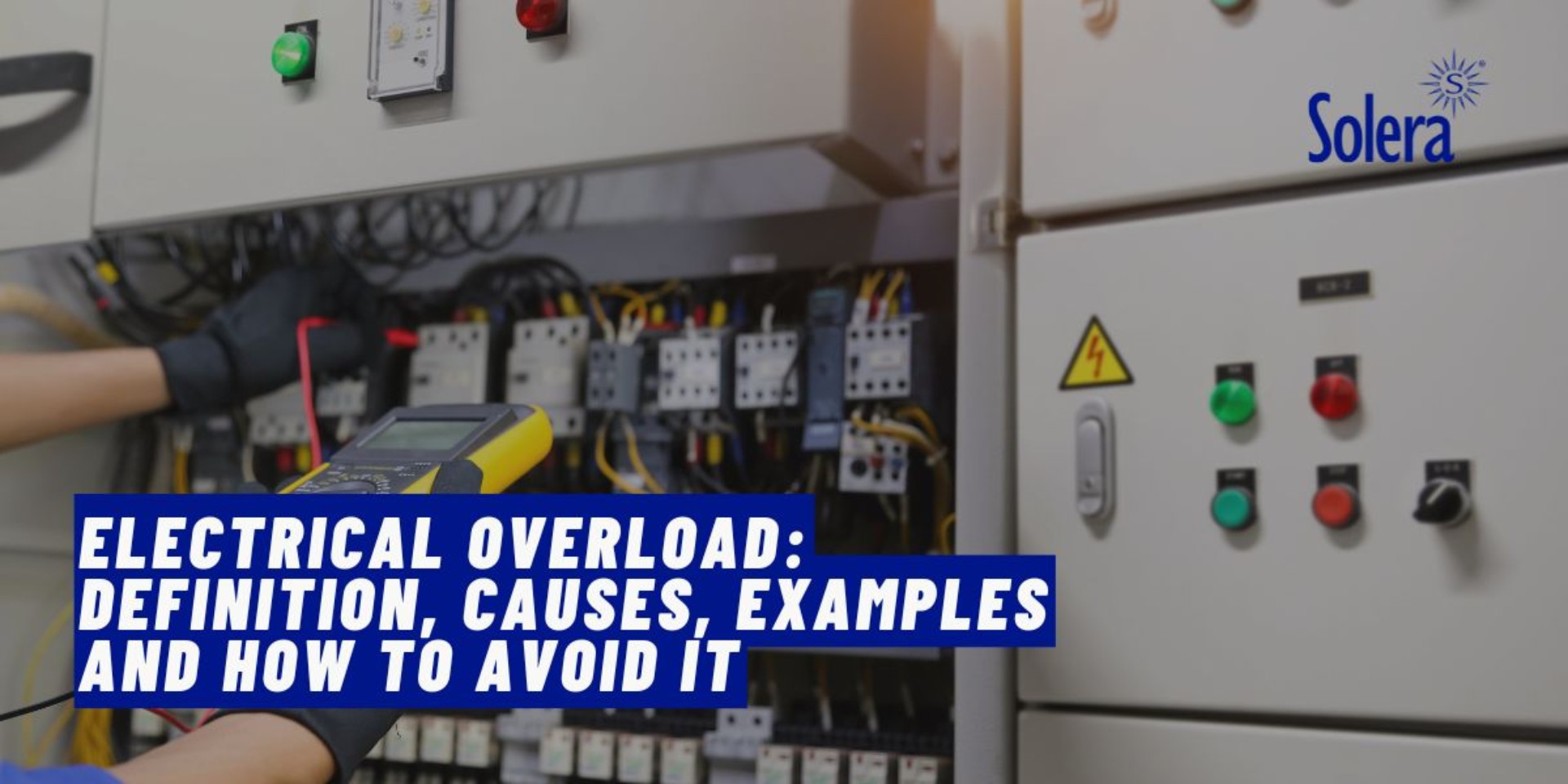
Electrical overload occurs when the current flowing through a circuit is higher than what that circuit is designed to carry for a period of time.
In simple terms: too much demand is placed on the wiring, the protective device, or the connected equipment.
Unlike a short circuit (a fault between conductors that causes a sudden and very high current), an overload typically happens when too many loads are connected at the same time, or when one load draws more current than expected.
This can happen in residential, commercial and industrial installations. It is dangerous because it creates heat inside cables, plugs and connections, which can damage equipment and, in the worst cases, start a fire.
For a clearer comparison, the Solera article on short circuits explains how a short circuit begins and why it behaves differently from an overload.
Key takeaways (quick summary)
- An overload is excess current caused by demand (not a fault between conductors).
- Overloads create heat, especially at weak points: plugs, terminals, worn insulation and loose connections.
- Repeated tripping of protective devices is a warning sign. Do not ignore it.
- Prevention is mostly about proper circuit design, good habits with multi-outlet strips, and correct protection (MCBs, fuses, RCDs, surge protection).
Electrical overload at a glance
| Topic | What it means | Why it matters |
|---|---|---|
| Overload | Current exceeds the circuit’s safe capacity due to connected load. | Causes heating over time, damages insulation and connections. |
| Short circuit | Fault between conductors producing a sudden, very high current. | Can be instantaneous and violent; protection must disconnect quickly. |
| Overcurrent | Umbrella term covering overload and fault currents. | Guides selection of protective devices and cable sizes. |
Warning signs you should not ignore
Overloads often give clues before they become dangerous. Common signs include:
- Frequent tripping of a circuit breaker when several devices run together.
- Warm plugs, sockets or power strips (heat is a red flag).
- Flickering or dimming lights when an appliance starts.
- Buzzing, crackling or sizzling from sockets or connections.
- Burning smell near outlets, consumer units or extension leads.
- Discoloured outlets, melted plastic, or visible marks around plugs.
If you see any of these, stop using the circuit and have it checked by a qualified electrician. Overloads can worsen slowly, then fail suddenly.
Common causes
Overloads are usually the result of everyday habits combined with a circuit that was not designed for that demand.
- Too many high-power devices on one circuit (for example, multiple appliances on the same kitchen sockets). The total current can easily exceed the circuit limit.
- Overuse of multi-outlet strips and extension leads. When many devices are connected to one point, the plug and cable can overheat even if everything “seems to work”.
- Old or defective installations. Aged cables, loose terminals, or protection devices that no longer operate correctly increase the risk. Worn wiring increases resistance and heat when the circuit is pushed harder than it can safely handle.
- Poor circuit distribution. In older buildings, several rooms may share one circuit. A “moderate” load in each room becomes a heavy load for the circuit overall.
- Voltage variations. Abnormal voltage conditions can increase current draw for certain equipment, making overload more likely.
Why loose connections make overloads worse
Even when the cable size is adequate, the weak points are often connections.
A loose terminal or worn socket creates extra resistance. Resistance turns current into heat. That is why overheated plugs and terminals are common in overload scenarios.

Typical examples of electrical overload (real-world scenarios)
Overloads are not always dramatic. Many happen in normal daily use. The key is recognising the patterns.
- Outlet overload: A TV, computer, chargers, a lamp and a small heater plugged into the same strip. It may work for a while, but the current can exceed what the strip, plug, or socket can handle. Heat builds up and the breaker may trip.
- Lighting overload: Several high-power lights on one circuit combined with other loads (for example, portable heaters on the same circuit). Dimming or flicker can indicate the circuit is near its limit.
- Simultaneous appliances: Using an electric oven, tumble dryer and dishwasher together can blow fuses or trip breakers, especially in older installations with limited circuit separation.
- Overloaded extension cords: Chaining power strips (“daisy chaining”) and plugging many devices into one wall socket. This concentrates current into one plug and one cable and is a common cause of overheating.
- Undersized upgrades: Adding a high-power heat pump, EV charger, or large workshop equipment to an older electrical system without upgrading the circuit. Repeated tripping suggests the circuit is overloaded.
What to do in the moment (practical steps)
- If a breaker trips, do not keep resetting it without reducing the load.
- Unplug some equipment and allow plugs and strips to cool.
- If you notice heat, smell, or buzzing, stop using that outlet.
- If tripping repeats, treat it as a design issue (circuit capacity, distribution, or a failing appliance).
Technical, economic and safety consequences
Overloads affect more than comfort. They can damage assets and create serious risks.
- Technical: Heat degrades insulation and weakens copper conductors over time. This can lead to cracked insulation, melted terminals, and eventually internal faults. Motors and electronic devices may also fail earlier due to repeated thermal stress. Frequent tripping can also cause loss of service to entire zones of a building.
- Safety: Overheating can ignite nearby materials (wood, plastics, insulation, dust). A burning smell, scorched outlets, or crackling sounds indicate immediate danger. Overload-related damage can also create exposed conductive parts and increase electric shock risk if a fault develops.
- Economic: Repairs, replacement of damaged equipment, and downtime. In commercial and industrial settings, overload events can stop production unexpectedly. In homes, repeated issues often lead to unplanned upgrades and emergency callouts.
Why overloads can trigger other failures
When insulation is damaged by heat, the risk of a fault rises.
In other words, a long-term overload can create the conditions for future short circuits or earth faults.
How to estimate load quickly (simple method)
You do not need complex tools to do a basic sense check.
The key relationship is:
I = P / V
- I is current (amps).
- P is power (watts).
- V is voltage (volts).
Example (typical single-phase supply)
If a portable heater is 2,000 W and the supply is roughly 230 V, then:
I ≈ 2000 / 230 ≈ 8.7 A
Now add a kettle (3,000 W ≈ 13 A), toaster (1,000 W ≈ 4.3 A) and dishwasher (2,000 W ≈ 8.7 A).
Combined, the current can exceed what a single circuit can carry, especially if other sockets on the same circuit are used at the same time.
Important: this is a simplified check. Real design must consider cable type, installation method, correction factors, protective devices and diversity.
How to avoid electrical overload (practical prevention)
Preventing overload is mainly about two things: proper circuit design and safe usage habits.
- Size each circuit correctly: Calculate expected demand and choose cable size and protective device accordingly. Good design protects both people and conductors. In Spain, the REBT requires protection against overcurrents and short circuits. Typical domestic examples include lighting circuits using smaller cable sizes and socket circuits using larger ones, but the correct solution depends on design and conditions.
- Avoid running multiple high-power appliances together: Ovens, dryers, kettles, heaters and air conditioning can draw high current. Staggering use reduces peak demand.
- Update old installations: Installations from decades ago were not designed for today’s loads (home offices, multiple chargers, high-power kitchen appliances). Updating consumer units, wiring and circuit distribution improves safety.
- Avoid excessive extension leads: Plug high-power devices directly into wall outlets where possible. Choose quality extension leads rated for the load, and avoid “daisy chaining”. A safer approach is installing additional socket outlets on properly designed circuits. Among safer solutions are special ION Series multi-outlet strips, designed to improve safety when many connections are needed.
- Inspect cables and connections: Look for frayed insulation, loose plugs, damaged sockets and overheating. Warning signs (sparks, buzzing, heat) should never be ignored.
- Distribute the load across circuits: Do not concentrate kitchen appliances, workshop tools or heaters on one circuit. Separate circuits for high-demand zones reduce overload risk.
- Install appropriate protective devices: Use correctly rated MCBs or fuses for overcurrent protection, RCDs for additional protection against earth leakage, and surge protection to manage transient overvoltage.
Power strips and extension leads: safe rules
| Do | Don’t |
|---|---|
| Use a quality strip rated for the intended load. | Daisy chain multiple strips together. |
| Keep strips visible and well ventilated. | Hide strips under rugs or behind insulation where heat builds up. |
| Plug high-power appliances into fixed outlets on suitable circuits. | Run heaters, kettles or ovens from a multi-outlet strip. |
| Replace damaged leads and worn sockets. | Ignore heat, smell, or repeated tripping. |
Recommendations according to UK Wiring Regulations (BS 7671)
In the UK, the BS 7671 Wiring Regulations require that all final circuits be protected against overcurrent, in accordance with Section 433 (Protection against overload current) and Section 434 (Protection against fault current).
This means each circuit must be protected by a fuse or circuit breaker whose rated current does not exceed the current-carrying capacity of the conductors.
In other words, the protective device must disconnect the supply before conductors are damaged. By selecting appropriate MCBs or fuses based on cable size, load demand, and installation conditions, most overload and short-circuit risks are reduced.
What this means in practical terms
- Design current is estimated and checked (for example using I = P / V for basic load checks).
- Cable size is chosen based on installation method and conditions (grouping, insulation, ambient temperature).
- The protective device is selected so it protects the cable, not just the appliance.
- Voltage drop limits and diversity assumptions are considered so circuits remain safe under real use.
Typical domestic values vary depending on design. Lighting circuits are often protected at lower currents than socket circuits, and socket circuits can be designed as ring or radial arrangements depending on the installation. Always follow the design calculations and BS 7671 requirements for the specific project.
Best practices in solar PV installations
Solar PV systems add a different set of overload risks because they include both AC and DC parts, and because components such as inverters and controllers have strict operating limits.
Each string of panels must be designed so that the current remains within the capacity of connected equipment. The protective distribution panel plays a key role in keeping the installation safe and organised.
Solera provides tools and guidance for solar professionals, including the photovoltaic configurator, which helps you define suitable configurations for protection and distribution.
Where overload risk appears in PV systems
- String combining: multiple strings combined incorrectly can increase current beyond what conductors or protections are designed for.
- Controller/inverter input limits: equipment must not be pushed beyond rated current.
- Heat build-up: enclosures and trunking must allow for heat dissipation, especially in exposed locations.
- Protection coordination: correct selection of fuses/breakers and surge protection improves safety during faults and switching events.
For a structured overview of the key parts of a PV system (modules, controller, inverter, batteries and protective panel), see the related article: materials needed to assemble an electrical panel.
Also consider practical design details: batteries need charge/discharge protections, and the distribution panel should include devices matched to the system voltage and current. Good enclosure choice and layout also matter for inspection and long-term reliability. You can explore suitable enclosures for protected installations.
Load sizing and recommended protections
To size an electrical installation correctly, you start with expected demand, then add an appropriate margin based on how the installation will be used.
From the power demand, you estimate current per circuit, then choose a cable size that can carry that current under the real installation conditions (installation method, grouping, ambient temperature, thermal insulation, and route length).
Why “cable size” is not just about amps on paper
Two cables with the same cross-section can behave differently depending on how they are installed.
For example, cables grouped together, installed in insulation, or run through hot areas may need derating. This is why regulations use correction factors to keep systems safe over time.
Match protection to the cable (not just to the load)
Once the cable and route are defined, select the protective device so it disconnects before the conductor overheats.
This is a key principle in overload protection: the protective device is there to protect the circuit and the cable, not only the appliance.
In three-phase and industrial systems, the same logic applies per phase. The difference is that loads, starting currents, and supply arrangements can be more complex, so professional design becomes even more important.
Protective devices (what each one does)
Different devices protect against different risks. Understanding the role of each one improves safety and helps avoid incorrect assumptions.
- Fuse: A single-use device with an internal element that melts when current exceeds its rated value. It is common in equipment protection and certain circuits. For a deeper explanation, see: What is a fuse and what is its function?
- Circuit breaker (thermal-magnetic): Uses two mechanisms: a thermal element for overloads (slower response) and a magnetic element for short circuits (fast response). It is resettable and widely used in consumer units and panels. Related reading: Thermal-magnetic circuit breaker
- Residual-current device (RCD): Detects earth leakage current and disconnects supply to reduce shock risk. It does not protect against overload on its own. RCDs are widely used and required for many circuits depending on installation type and location.
- Surge protector: Diverts transient overvoltage (for example from lightning or switching events) to reduce damage to electronics. Surge protection is often installed in main panels and in circuits supplying sensitive equipment.
- Protected multi-outlet strip: Some multi-outlet strips include internal protection or safety features to reduce overheating risk. For example, Solera’s ION Series is designed with safety in mind for environments where many connections are concentrated.
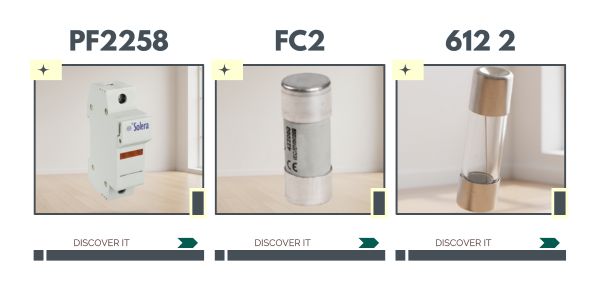
Comparative table of electrical protection devices
| Type | Function | Application |
|---|---|---|
| Fuse | Interrupts the circuit when the element melts due to overcurrent. | Equipment and circuit protection where simple, reliable protection is needed. |
| Thermal-magnetic circuit breaker | Trips on overload (thermal) and short circuit (magnetic). | Main protective device for many domestic and commercial final circuits. |
| Residual-current device (RCD) | Disconnects on earth leakage to reduce shock risk. | Circuits in locations with increased risk (kitchens, bathrooms, outdoors) and many socket circuits. |
| Surge protector | Limits transient overvoltage by diverting it to earth. | Panels and circuits supplying sensitive electronics and control systems. |
| Protected power strip | Designed to reduce overheating and improve safety where many devices connect. | Homes, offices and workspaces where multiple low-to-medium loads are used together. |
FAQ (common questions)
Is an overload always obvious?
No. Many overloads build slowly through heat. The system may appear to work until a weak point fails (socket, plug, terminal, or insulation).
Why does the breaker trip only sometimes?
Because overload depends on total demand and time. A breaker may tolerate a small overload briefly, but trip when the load is higher or sustained longer.
Does an RCD protect against overload?
No. An RCD reacts to earth leakage current. Overload protection is provided by devices such as MCBs and fuses.
Is it safe to run a heater on an extension lead?
It is not recommended. Heaters draw high current and can overheat plugs and extension leads. Use a properly rated fixed outlet on an appropriate circuit.
Conclusion
Preventing electrical overload is mainly a matter of good design and good habits.
- Plan circuit capacity and distribution properly.
- Use protective devices correctly and match them to the cable and the circuit.
- Avoid overloading sockets with power strips and extension leads.
- Act early when you see warning signs such as heat, smell, flicker, or repeated tripping.
With proper load calculation, correctly rated protection devices, and safe connection practices, the risks of damage and electrical accidents are drastically reduced.
Remember: it is better to add circuits or outlets correctly than to push a system to its limit.