

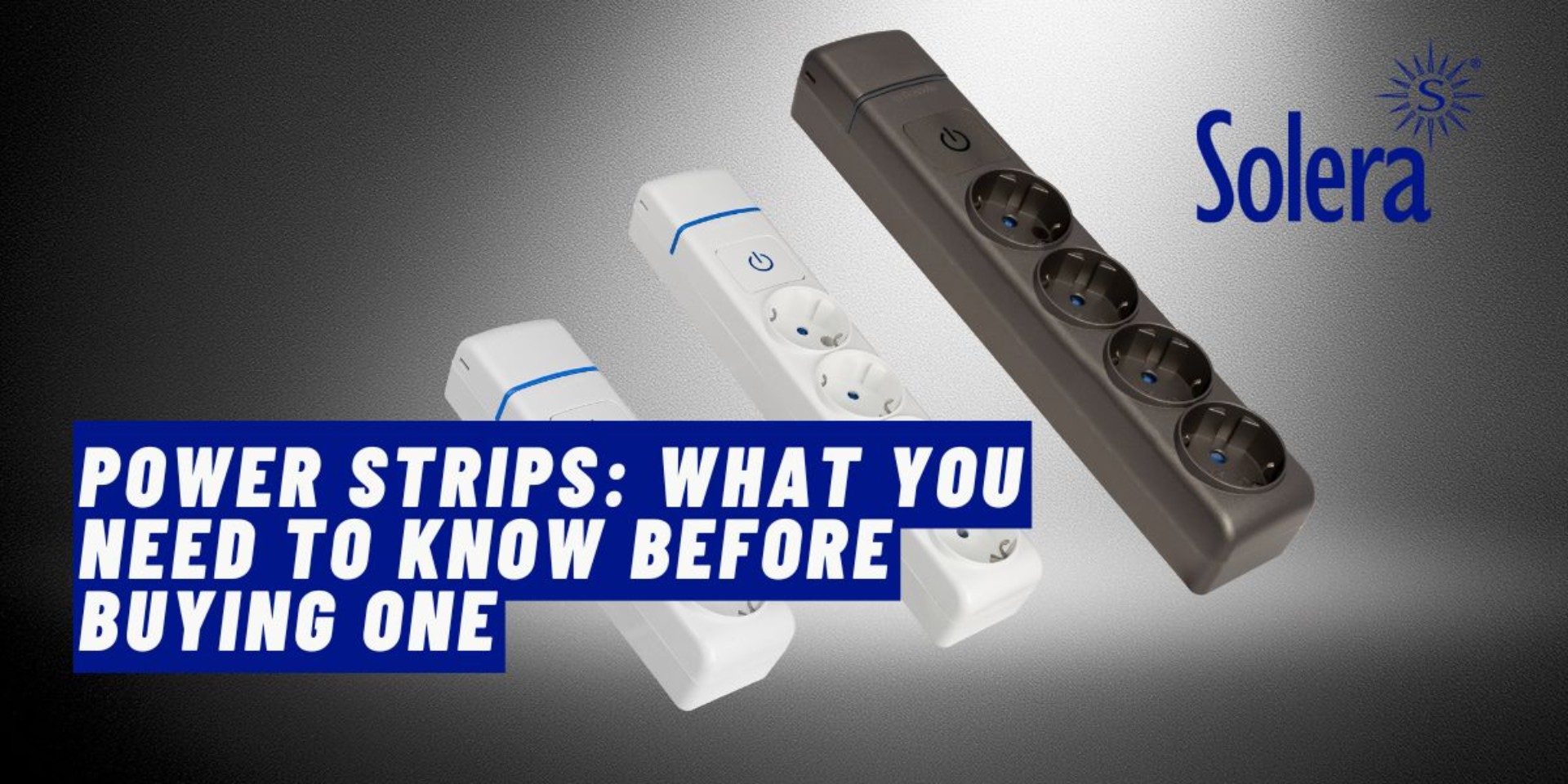
Power strips, also known as multi-outlet sockets, are essential devices in any modern electrical installation. They allow multiple electrical appliances to be powered from a single socket, making them a practical solution for homes, offices, businesses, and even industrial environments.
However, not all power strips offer the same level of quality, protection, and performance. Choosing the right model means evaluating various technical, safety, and usage factors, which we detail below.
1. Define the Intended Use: Home, Office, or Industrial
The first criterion for selecting a power strip is where and how it will be used. This will determine the level of protection and material quality it must offer.
- Home Use: Ideal for powering low-demand devices such as lamps, TVs, or chargers. A standard certified strip is sufficient in this case.
- Offices and IT Environments: Computers, printers, monitors, and networking equipment require strips with surge protection to prevent damage from voltage spikes.
- Humid or Outdoor Areas: Kitchens, workshops, or outdoor zones demand models with IP protection. For example, an IP44-rated strip can withstand splashes and dust.
- Industrial Environments: It is essential to opt for more robust solutions like BYCLA mobile plugs and sockets made from materials such as elastomer or technical rubber.
Correctly defining the usage environment will prevent overloads, premature failures, and unnecessary risks.
2. Always Check Certifications and Safety Features
Electrical safety is a top priority. A low-quality power strip can pose serious risks: short circuits, overheating, or even fires.
Key requirements:
- Certifications such as CE or TÜV: Ensure compliance with European regulations.
- Flame-retardant materials: Reduce fire propagation in case of failure.
- Surge protection: Essential when connecting sensitive devices.
- Individual switches: Allow turning off sockets independently, optimizing consumption and safety.
- Child protection: Crucial in homes with children.
At Solera, we work under the highest standards of quality and safety so our solutions meet your needs with full confidence.
3. Load Capacity: How Much Power Do You Need?
Each power strip has a load limit expressed in watts (W). Exceeding that threshold can cause overheating or system failure.
Example calculation:
- Laptop: 150W
- Monitor: 100W
- Printer: 80W
- Total: 330W
This consumption is manageable by a standard strip. However, if connecting a microwave (1,500W) or a heater (2,000W), you must use a strip with high capacity, above 3,500W.
Always check the maximum admissible power indicated by the manufacturer and avoid connecting multiple high-consumption devices simultaneously.
4. Cable Length and Section: Two Key Aspects
The cable is often underestimated. It’s not enough for it to have the desired length; its quality is just as important.
- Length: Avoid unnecessary extenders. Choose the right length to reach your devices without forcing connections.
- Recommended minimum section: 1.5 mm² for general use. Smaller sections may overheat under heavy loads.
- Insulation: Must resist bending, temperature, and friction.
A quality cable extends the power strip's lifespan and reduces heating risks.
5. Extra Features: Comfort and Innovation
Many current strips include functions that make them more versatile:
- USB ports: For charging phones or tablets directly.
- LED indicators: Show power presence or if the surge protector is active.
- Modular design: Allows expanding the number of outlets.
- Mounting systems: To install them on walls or under desks.
These features improve ergonomics, organization, and space efficiency.
6. Need Something More Durable Than a Power Strip?
In demanding environments or temporary installations, conventional strips may not suffice. In such cases, consider solutions like BYCLA mobile plugs and sockets.
Made from recyclable TPE elastomer and technical rubber, they offer:
- High mechanical and thermal resistance.
- SOFT touch for better ergonomics.
- Double grounding system for maximum safety.
- Available in white and black for better aesthetic integration.
These solutions are ideal for temporary installations, technical work, workshops, or outdoor use. They combine safety, comfort, and durability with a design aimed at professional use.
7. Socket Layout: Avoid Unnecessary Blocking
Ever tried plugging in two adapters and one blocks the other? That happens when sockets are poorly spaced.
Choose strips with:
- Well-spaced sockets: To avoid physical interference between plugs.
- Angled design: Useful for fixed installations or hard-to-reach areas.
A smart design improves access, order, and overall safety.
Conclusion: Choose Wisely, Install with Confidence
Selecting the right power strip is no minor decision. It directly affects energy efficiency, device safety, and installation reliability.
Before choosing a model, make sure to:
- Define the usage environment
- Verify certifications and safety measures
- Calculate total electrical load
- Evaluate cable quality
- Consider additional features and design
At Solera, we offer a wide range of multi-outlet power strips and professional mobile plugs that combine functionality, safety, and design. Explore our solutions and find the most suitable option for your electrical installation.